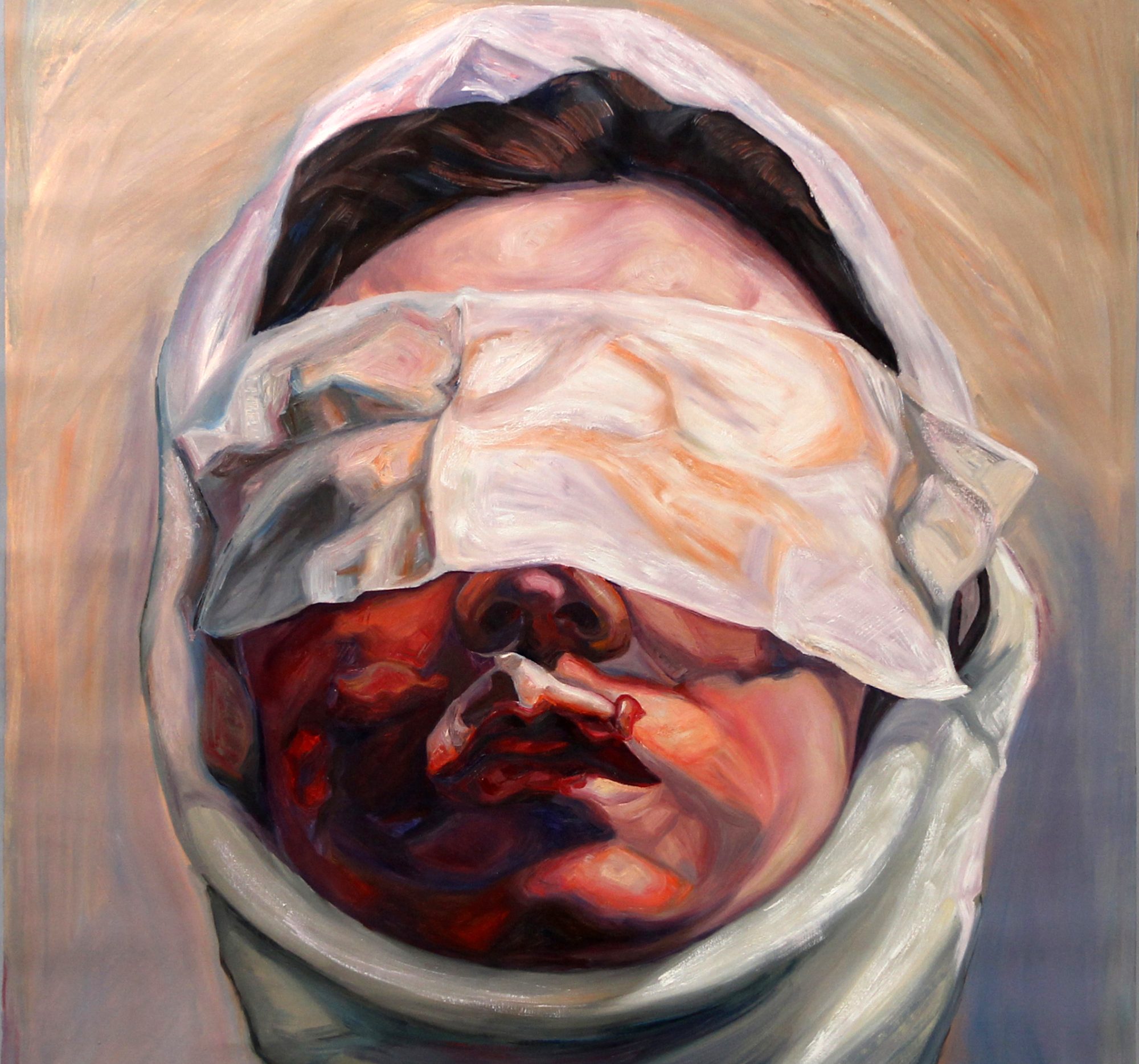
My creative artistic research examines the social, cultural, and political ideologies that shape “ideal female beauty” and their impact on women’s identity, representation, and artistic production. These ideologies dictate societal expectations for women’s bodies and influence artistic discourse, shaping how female artists are perceived and categorized. Through both theoretical and practice-led research, I critically engage with feminist methodology, exploring the intersection of body politics, gender representation, and contemporary visual culture.
Through painting, drawing, photography, video, and film, my work challenges patriarchal aesthetics in contemporary Chinese art and culture by critiquing the tendency in Chinese art criticism to associate women’s art with “flowers,” a metaphor that romanticizes and confines their artistic contributions within a decorative framework. This aesthetic framing reinforces the same gendered ideologies that construct beauty standards, positioning women’s art as ornamental rather than intellectually or politically significant. These limitations are further perpetuated by the dominant Chinese connotation of feminism as “feminine-ism,” as well as critical perspectives that conflate women’s artistic production exclusively with notions of femininity, overlooking their full creative agency and power.
My artistic practice explores feminism through projects that examine distinct yet interrelated themes, including cosmetic surgery, identity, female representation, LGBTQ+ issues, and maternity and care. My early research focused on cosmetic surgery and the construction of female identity in contemporary Chinese society, critically examining patriarchal beauty standards and the increasing normalization of surgical modification. Drawing parallels between the pressure on young Chinese women to undergo non-therapeutic cosmetic procedures and the historical practice of foot-binding during the Qing Dynasty (1644–1911), I highlight how today’s surgical alterations reflect the enduring expectation for women to modify their bodies to fit imposed beauty standards.
My creative process incorporates extensive research, including the study of medical texts and interviews with patients. In my early paintings, I referenced black-and-white medical imagery to emphasize the desensitized nature of cosmetic surgery. Later, I began using myself as the subject, applying makeup and dressing up to resemble a patient in pre- and post-surgical photographs, using my own face and body as visual references for my paintings. I intentionally created my own color palettes in the paintings to express the trauma and suffering that often accompany such procedures.
This work laid the foundation for my interdisciplinary PhD research, which expanded my inquiry into the historical and cultural constructs of female representation, particularly within art criticism in China. I examined how ideological shifts have shaped representations of women from the 20th century to the present, analyzing images from Cultural Revolution propaganda posters (1950s–70s), contemporary beauty advertising, selfie culture, and bodybuilding aesthetics. My research also investigates how traditional Chinese Confucian ideals, patriarchal aesthetics in the contemporary Chinese art market, Chinese Communist Party policies on gender, and global consumerism influence evolving portrayals of women. Through large-scale paintings, I critique how artistic discourse reinforces gendered stereotypes, confining women’s artistic agency within an aestheticized framework. Additionally, my PhD work deepened my exploration of the psychological and physical implications of aesthetic surgery through self-portraiture, staged photography, and experimental video, examining how women internalize and embody beauty norms.
My works do not always present confrontational imagery of women. During the COVID pandemic, I created a new series of small oil paintings, Portraiture, to advocate for body positivity and inclusivity. I reached out to influencers and artists on social media who share an interest in challenging conventional standards of female beauty. With their permission, I used their photographs as references to paint my interpretation, expressing my appreciation for their perspectives and celebrating the diversity of their bodies.
In addition to drawing and painting, I have expanded my artistic practice to lens-based media, allowing me to extend my critique of gender representation beyond static imagery. My short film BEAUTY (2017) is an experimental exploration of cosmetic surgery culture and the cyclical nature of beauty trends, using lighting and surreal imagery to expose the psychological impact of constantly shifting aesthetic ideals. My produced film project, Best Wishes (2021), addresses LGBTQ+ identity and the pressures of heteronormativity in contemporary Chinese society, highlighting the intersection of the traditional Chinese philosophy–Confucian family expectations and personal identity through the lens of queer experience. My recently produced short film, SQUIRREL (2025), examines themes of identity, isolation, and gender through a feminist lens, challenging traditional portrayals of women in contemporary fantasy culture. It incorporates abstraction, symbolism, and painterly approaches to present a nuanced portrayal of female identities. All the films, alongside my painting and photography, engage with feminist discourse and interrogate how visual culture constructs and constrains notions of identity, beauty, and autonomy.
My current research builds on these themes by addressing motherhood, reproductive rights, and the political dimensions of female autonomy. My series Maternity Journey (oil paintings, 88 x 65 inches) explores the physical and emotional realities of childbirth and postpartum recovery, responding directly to the pressures placed on women by social media to “bounce back” after childbirth. Inspired by my own experience of undergoing emergency C-section surgery, navigating motherhood with limited social support, and witnessing political restrictions on reproductive healthcare in Texas, where I am living, and on women’s reproductive autonomy in China, where I am from, this work challenges idealized portrayals of motherhood in both historical painting and contemporary media. By contrasting serene, sanitized depictions of mothers with raw, large-scale representations of the body before, during, and after childbirth, I seek to raise awareness about women’s health, autonomy, and the societal expectations that dictate female worth through appearance.
My feminist art practice and research are deeply intertwined with my lived experience, reflecting both personal and broader feminist struggles in contemporary China, as well as my perspective as an Asian artist based in the United States. As part of the “post-80s” and “post-90s” generation, the only generation born under China’s “One-Child” policy, I belong to a wave of women who, for the first time, had access to educational opportunities equal to those of men. Women in my generation have benefited from social and economic transformations over the past three decades. However, few women have made it into positions of power in the contemporary Chinese art world. Through my work, I aim to challenge patriarchal aesthetics, interrogate gendered ideologies, and advocate for women’s artistic agency. Moving forward, I aim to continue my exploration of feminist visual culture across painting, drawing, photography, video, and film, fostering critical dialogue on gender representation in art and society.
 SU YANG 杨苏